RECLAIMING BHARAT AS A CIVILIZATIONAL EMPIRE.
WHY INDIA MUST REVERSE THE ERROR AND RECLAIM ITS CIVILIZATIONAL SELF?

What if the greatest mistake of modern India was not colonial subjugation, but what came after? In shedding British rule, India had a chance to reclaim its ancient identity—one of the world’s oldest, richest, and most humane civilizations. Instead, it adopted the vocabulary of its colonizers, the frameworks of Europe, and the geopolitical logic of broken nations. Bharat—the civilizational soul of India—was sidelined in favor of a state structure that could have belonged anywhere. In a world now craving rootedness, meaning, and moral clarity, it is time for India to stop mimicking the West and start remembering itself. It is time to reverse the error.
I. THE FOUNDATION ERROR
In 1947, India won its political independence but surrendered its civilizational self. Instead of emerging as Bharat—a timeless cultural and spiritual power—it chose to become a secular, socialist republic modelled after Western nation-states.
It adopted:
• A foreign vocabulary (secularism, socialism),
• Colonial-era boundaries, which broke the natural cultural unity,
• A national identity built not on 5,000 years of continuity, but 75 years of constitutional design.
India didn’t just gain freedom—it forgot what it was free as.
This was the foundational error. And the time has come to reverse it.
II. 🕉️ BHARAT MORE THAN A COUNTRY
Bharat is not just a name—it is a civilizational force:
• One of the oldest surviving civilizations, predating most modern states.
• Bound not by race or religion, but by Dharma, memory, sacred geography, and a pluralist ethos.
• A civilization where Vedas, Buddhism, Bhakti, and modern science coexisted in the same consciousness.
Historically, Bharat’s cultural sphere spanned:
• Gandhara (Afghanistan),
• Taxila and Mohenjodaro (Pakistan),
• Bengal and East Bengal (Bangladesh),
• Nepal, Tibet, and parts of Myanmar and Southeast Asia,
• Not through conquest—but through culture, language, and spiritual magnetism.
Bharat was never an empire of force. It was an empire of meaning.
III. WHY CIVILIZATIONAL POSITIONING IS STRATEGIC
In a world where strategic influence increasingly flows from ideas, not armies, reclaiming a civilizational identity isn’t nostalgia—it’s geopolitical necessity.
Civilizational Identity Gives:
• Legitimacy: India can no longer be boxed into colonial cartography or post-WWII alliances. It allows India to transcend borders and assert natural influence
• Reach: A civilizational Bharat naturally projects influence across its historical sphere—Pakistan, Nepal, Bangladesh, Myanmar, Sri Lanka—without crossing borders. Offers a cultural umbrella under which neighbours become civilizational provinces, not rivals
• Dominance in Thought: Makes India’s leadership in South Asia and Indo-Pacific intellectually and historically legitimate. Bharat offers an alternative worldview to the West and China: not exploitative, not imperial, but deeply humanist.
• Counters China’s Confucian revival with a more inclusive, pluralistic alternative
Strategic power today is rooted in civilizational confidence. It’s civilizational legitimacy. The Strategic dominance today isn’t military
IV. THE WORLD HAS ALREADY DONE THIS
🟥 China and Confucianism
• Revived Confucius post-Mao to legitimize its system.
• Uses Confucius Institutes globally to spread its worldview.
• Frames Tibet and Taiwan as civilizational issues, not border disputes.
🟥 Russia and Russkiy Mir
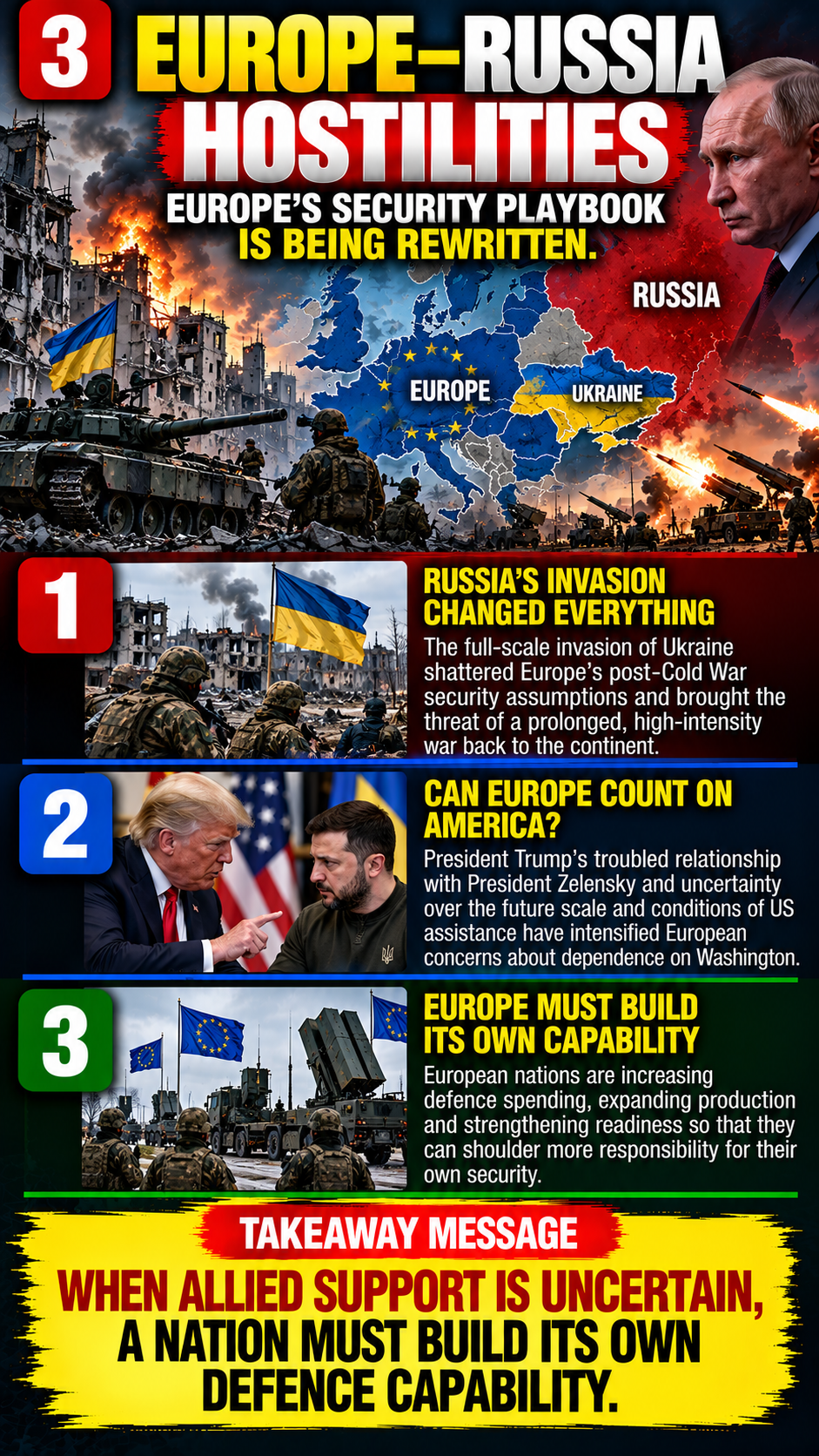
Putin invokes the Russian World doctrine to justify actions in the erstwhile USSR nations. Civilizational memory is now national policy.
• Russia positions itself as the rightful leader of a greater “Russian World,” uniting:Slavic nationsOrthodox Christian populationsRussian-speaking minorities in post-Soviet states
• This is both a cultural narrative and a geopolitical framework.
• Used to justify actions in:Crimea (2014)Eastern Ukraine (Donbas)Georgia (2008)Interventions in Belarus, Kazakhstan, Armenia
🟥 Iran and Persian-Shia Identity
• Projects itself as protector of a Shia civilizational arc, expanding influence from Lebanon to Yemen.
🟥 Turkey and Neo-Ottomanism
• Erdogan revives Ottoman glory, reshaping Turkey’s regional policy and identity.
V. BHARAT HAS ALREADY ACTED LIKE A CIVILIZATION
Even in its post-colonial form, India has shown civilizational instincts.
1. The Food Bowl of the World
• India exported food grain during global shortages, including to hostile or poor nations.
• Not out of obligation—but out of Dharma: feeding the hungry is sacred in the Bharatiya ethos.
2. Vaccine Maitri During COVID-19
• India supplied vaccines to over 70 countries, even while battling its own crisis.
• It wasn’t geopolitics—it was civilizational responsibility.
These were not state acts—they were civilizational gestures, embedded in Bharat’s worldview of Vasudhaiva Kutumbakam (the world is one family).
VI. A STRATEGIC DOCTRINE FOR CIVILIZATIONAL BHARAT
To reverse the error and reclaim the future, India must act with clarity and courage:
1. Reclaim the Name
• Begin global transition from “India” to “Bharat”.
• Let "India" be the nation-state; Bharat becomes the civilizational identity.
2. Build a Bharat Mandala
• Construct a civilizational map—not of conquest, but of cultural gravity.
• Treat Pakistan, Bangladesh, Nepal, and Sri Lanka as civilizational provinces, not enemies.
• Expand spiritual, linguistic, and philosophical ties across Asia.
3. Institutionalize Cultural Diplomacy
• Export Sanskrit, Tamil, classical arts, Ayurveda, and Vedanta.
• Launch Bharatiya Institutes globally—counterweights to Confucius Institutes.
• Make cultural narratives a strategic arm of foreign policy.
4. Lead Thought, Not Just Trade
• Offer the world a civilizational alternative to Western individualism and Chinese authoritarianism.
• Promote Dharma-based ecology, ethics, and technology.
• Create platforms for a global decolonial movement, led by Bharat.
VII. WHAT NEXT: REVERSE THE ERROR
Bharat does not need to redraw its borders.
It must redraw the world’s understanding of it.
Reclaiming Bharat is not about religious revival or territorial aggression. It is about restoring:
• Civilizational memory,
• Cultural confidence,
• And strategic clarity.
In a fragmented world, what the world needs is not another superpower.
It needs a civilizational compass.
And Bharat—if it reverses the error—can be that compass.
CONCLUSION
The world today is searching for something deeper than GDP rankings or military alliances. It is searching for purpose, stability, and wisdom. In this fractured landscape, Bharat has a historic opportunity—not to dominate, but to guide.
By reversing the error of self-erasure, India can once again become what it was always meant to be: a civilizational lighthouse. Not a superpower defined by borders, but a source of civilizational light that transcends them.
A Bharat that does not impose, but inspires. Not just for its own sake, but for a world adrift and aching for truth.
It is not too late to return. But it must begin now.